




Trust Administration Boca Raton: Managing Trusts with Local Insight
Trust administration in Boca Raton requires more than generic knowledge of estate law. Florida’s probate rules and Palm Beach County procedures create unique challenges that demand local insight.
At Rubino Findley, PLLC, we’ve guided families through the complexities of managing trusts in our community. This guide walks you through what trust administration actually involves and why having someone familiar with local courts and financial institutions makes a real difference.
What Trust Administration Actually Requires
Trust administration in Boca Raton starts the moment the settlor passes away, and the timeline matters more than most trustees realize. Within the first 30 days, you must locate the trust documents, obtain multiple death certificates, and secure all trust assets to prevent loss or theft. Days 31 through 60 bring a hard deadline: Florida Statute 736.0813 requires trustees to notify all qualified beneficiaries within 60 days of learning the trust is irrevocable. This notification must include the trustee’s full name and address, confirmation of the trustee’s acceptance of the role, and notice that beneficiaries have the right to obtain a copy of the trust document and receive accountings. Missing this window creates liability and triggers disputes that derail the entire administration process.
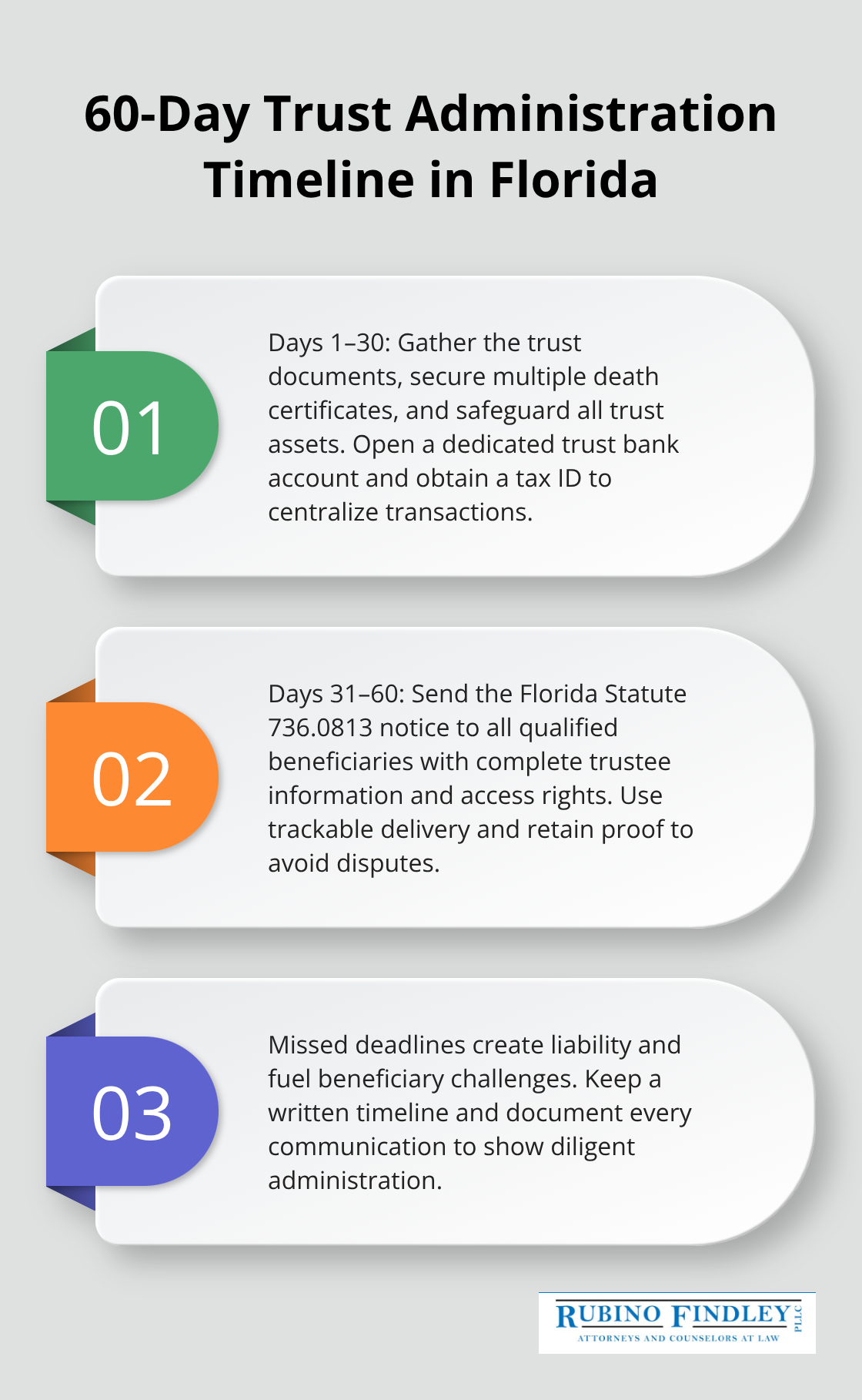
Securing and Valuing Assets Comes First
The physical work of trust administration begins when you gather every asset. You should open a trust bank account immediately and obtain a tax identification number from the IRS, then transfer liquid assets into that account. Real estate, investment accounts, business interests, and personal property all require careful documentation. You must obtain date-of-death valuations for tax purposes and title verification for property transfers. This inventory phase typically takes two to four months, and rushing it creates problems later. Palm Beach County financial institutions like local banks and title companies can slow the process if you lack familiarity with their specific procedures, so establishing relationships with local professionals speeds everything up. Many trustees create a master asset spreadsheet with account numbers, institution contacts, and asset values to track progress and prepare the required annual accountings that beneficiaries demand.
Tax Returns and Debt Resolution Cannot Be Ignored
Trust administration requires you to file IRS Form 1041 for trust income and potentially state returns, depending on the assets and income generated. You must identify all creditors and notify known creditors of the settlor’s death, then evaluate and pay valid claims. Florida law gives creditors up to two years from the date of death to file claims against the trust, which means you cannot make final distributions until that period expires or you have reasonably confirmed no additional claims will arrive. Many trustees make the mistake of distributing assets too quickly, exposing themselves to personal liability for unpaid debts. The safer approach involves waiting at least six months before making any significant distributions to beneficiaries. After you pay valid debts, taxes, and administration expenses, you distribute the remaining assets according to the trust’s terms and maintain meticulous records of every transaction. Florida law requires you to provide annual accountings to beneficiaries, and these must be detailed enough that beneficiaries understand exactly what happened to trust assets during that year.
Local Procedures Shape Your Timeline
Palm Beach County court procedures and local financial institution practices directly affect how quickly you complete each phase of administration. Understanding these local nuances prevents unnecessary delays and protects you from procedural missteps. The next section explores why this local knowledge matters so much and how it influences your decisions at every stage of trust administration.
Why Local Knowledge Actually Changes Trust Administration
Palm Beach County Filing Requirements Shape Your Timeline
Florida Statute 736.05055 requires trustees to file a notice of trust with the court in the county where the settlor was domiciled at death. For Boca Raton residents, that means Palm Beach County. This seemingly simple requirement becomes complex when you discover that Palm Beach County’s clerk files and indexes the notice of trust differently depending on whether probate exists in parallel. The county’s procedures affect filing fees, indexing timelines, and how quickly the court acknowledges your administration. Trustees unfamiliar with these local procedures waste weeks waiting for clarification or resubmitting documents in the wrong format.
Palm Beach County also maintains specific rules about creditor claim periods and whether summary administration applies to smaller estates under $75,000 of non-exempt assets. Understanding these local thresholds determines whether you navigate a streamlined process or a more involved court procedure. The Florida Trust Code Chapter 736 governs your duties statewide, but Palm Beach County’s local court rules and clerk practices shape how you actually execute those duties.
Local Financial Institutions Operate on Different Timelines
Financial institutions in South Florida operate on timelines and procedures that vary significantly from national standards. Local banks require additional documentation for trust accounts compared to what you’d encounter in other regions, and some institutions maintain trust officers who handle these accounts exclusively. Delays in opening trust accounts or transferring assets into trust names often stem from trustees not understanding what local institutions actually need.
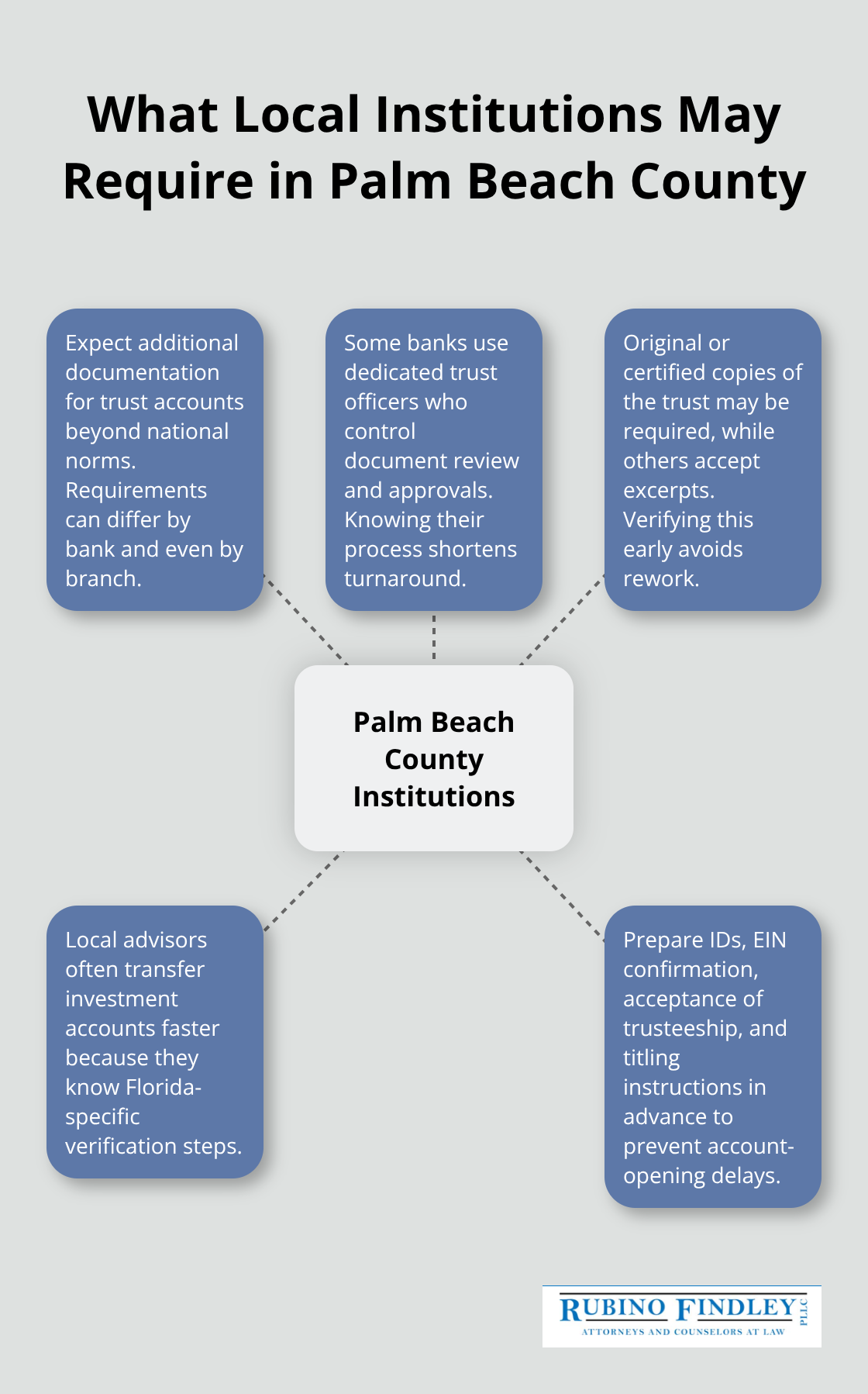
Some Palm Beach County banks require an original or certified copy of the trust document, while others accept excerpts; knowing this difference prevents weeks of back-and-forth communication. Investment accounts held with local advisors often transfer more smoothly than accounts with national firms because local professionals understand Florida’s trust administration requirements and can execute transfers without unnecessary verification delays. Establishing relationships with local title companies, banks, and probate professionals before you need them accelerates every phase of administration.
Creditor Claims and Beneficiary Notification Follow Local Protocols
The creditor claim period under Florida law runs two years from the date of death, but Palm Beach County’s published procedures for notifying creditors and handling claims follow specific protocols that local attorneys navigate routinely. Communicating with beneficiaries via certified mail or secure email with read receipts is standard practice in Palm Beach County trust administration, and local professionals know which methods courts recognize as valid proof of notification. Without this local knowledge, trustees often use notification methods that later create disputes about whether beneficiaries were properly informed, potentially extending administration by months.
Many trustees discover too late that the bank branch handling the trust account has different procedures for trust transfers than branches in other counties, or that local real estate closing attorneys have specific requirements for title verification that differ from state standards. These procedural variations accumulate quickly and compound delays throughout the administration process. The next section addresses the common challenges that arise when trustees lack this local familiarity and how to navigate them effectively.
Common Challenges in Trust Administration
Beneficiary disputes emerge faster than most trustees expect, and they stem from poor communication rather than disagreement about trust language. When you fail to send the required 60-day notification under Florida Statute 736.0813 or skip the annual accountings, beneficiaries assume you’re hiding something. At that point, even transparent administration looks suspicious.
Communication Prevents Disputes Before They Start
The solution involves communicating proactively with certified mail or secure email with read receipts, sending detailed accountings that explain every transaction, and addressing beneficiary questions within 30 days. Florida law permits beneficiaries to request information within 30 days, and you must respond or face personal liability. Early legal guidance prevents conflicts entirely-waiting until disputes escalate before involving an attorney costs far more than upfront consultation. Detailed accountings that explain every transaction protect you and satisfy beneficiaries that assets are being managed properly.
Complex Assets Create Valuation Disputes
Complex assets like real estate holdings, business interests, or investment portfolios create additional friction because beneficiaries question valuations and management decisions. Obtain independent appraisals for all major assets and document your reasoning for investment or management choices in writing. If beneficiaries remain dissatisfied, the cost of resolving disputes through litigation or mediation often exceeds the cost of hiring professional guidance upfront.
Illiquid Assets Slow Distribution Timelines
Illiquid assets present the hardest challenge because you cannot quickly convert them to cash for distributions. Real estate in Palm Beach County typically requires three to six months to sell, and rushing the sale often results in lower proceeds that anger beneficiaries. Business interests create even greater complications because operating businesses generate ongoing income that beneficiaries may dispute, and determining fair market value requires professional valuation services that cost between $5,000 and $25,000 depending on complexity.
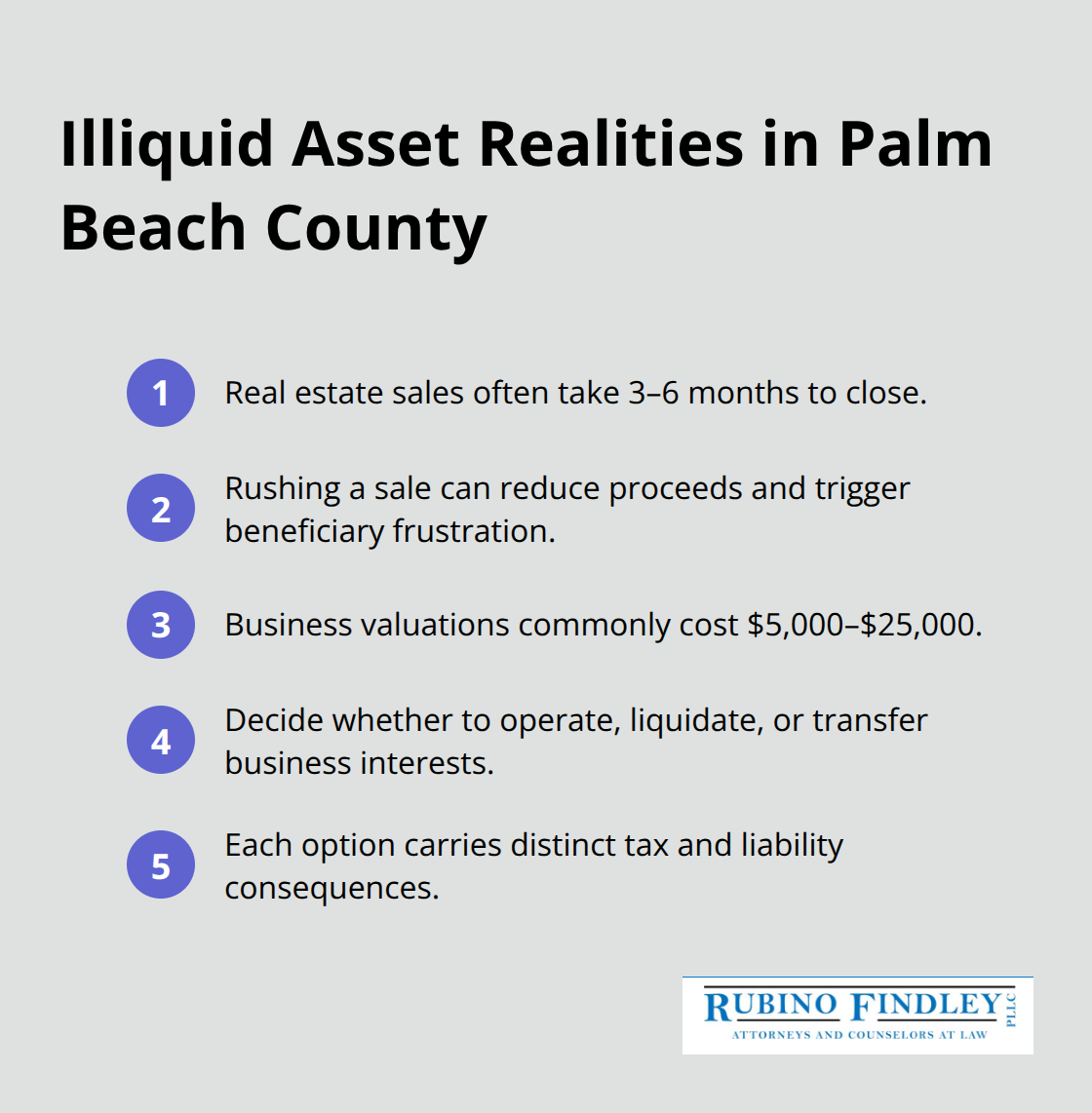
You must decide whether to continue operating the business, liquidate it, or transfer it to beneficiaries, and each option carries different tax and liability implications.
Tax Compliance Exposes You to Personal Liability
Tax compliance becomes the most dangerous area because mistakes expose you to personal liability that your trustee insurance may not cover. The IRS requires Form 1041 filings for trust income, and state returns depend on whether the trust generated Florida taxable income. Coordinate with a CPA experienced in trust taxation to prevent errors that compound over months of administration. If the trust holds appreciated assets, beneficiaries receive a step-up in basis at the settlor’s death, meaning capital gains taxes apply only to appreciation occurring after death, not before. Failing to claim this benefit costs beneficiaries thousands in unnecessary taxes. Consult with both a trust attorney and CPA before making major decisions about asset management or distribution timing.
Final Thoughts
Trust administration in Boca Raton demands attention to detail, strict adherence to Florida timelines, and familiarity with Palm Beach County procedures. Missing the 60-day beneficiary notification deadline, failing to file the notice of trust with the court, or skipping annual accountings creates liability that extends administration by months and damages your credibility with beneficiaries. These risks happen regularly when trustees attempt administration without local guidance.
Working with a local attorney transforms trust administration from a stressful solo effort into a manageable process. An attorney familiar with Palm Beach County court procedures knows exactly what the clerk requires, understands how local financial institutions handle trust accounts, and navigates creditor claims and beneficiary disputes before they escalate. More importantly, an attorney coordinates with CPAs and financial advisors to protect you from personal liability for mistakes that could otherwise cost thousands.
Reach out to Rubino Findley, PLLC for a free consultation before you make major decisions about asset management or distributions. We work with families throughout Palm Beach County and understand the specific challenges that arise in trust administration in Boca Raton. Whether you are just beginning administration or facing complications partway through, early guidance prevents costly mistakes and accelerates the entire process toward completion.