




Florida Probate Court Procedures: What to Expect in the Probate Process
Navigating probate after losing a loved one is overwhelming. Florida probate court procedures involve multiple steps, strict deadlines, and complex legal requirements that catch many families off guard.
At Rubino Findley, PLLC, we’ve guided countless families through this process in Palm Beach County. This guide walks you through each stage so you know exactly what to expect.
Florida Probate Court Procedures in Boca Raton: What Happens at Each Stage
Selecting the Right Probate Path for Your Estate
Florida offers two distinct probate routes, and selecting the correct one saves time and money. Summary administration works when non-exempt assets total $150,000 or less, or when the decedent died more than two years ago regardless of estate size. This streamlined process typically wraps up in two to three months. Formal administration handles larger estates or those with complications like contested wills or significant debts, and generally takes six to twelve months depending on complexity. The distinction matters immediately because it determines filing requirements, court involvement, and overall costs. Court filing fees alone run $345 to $405, but attorney fees vary dramatically between the two paths.
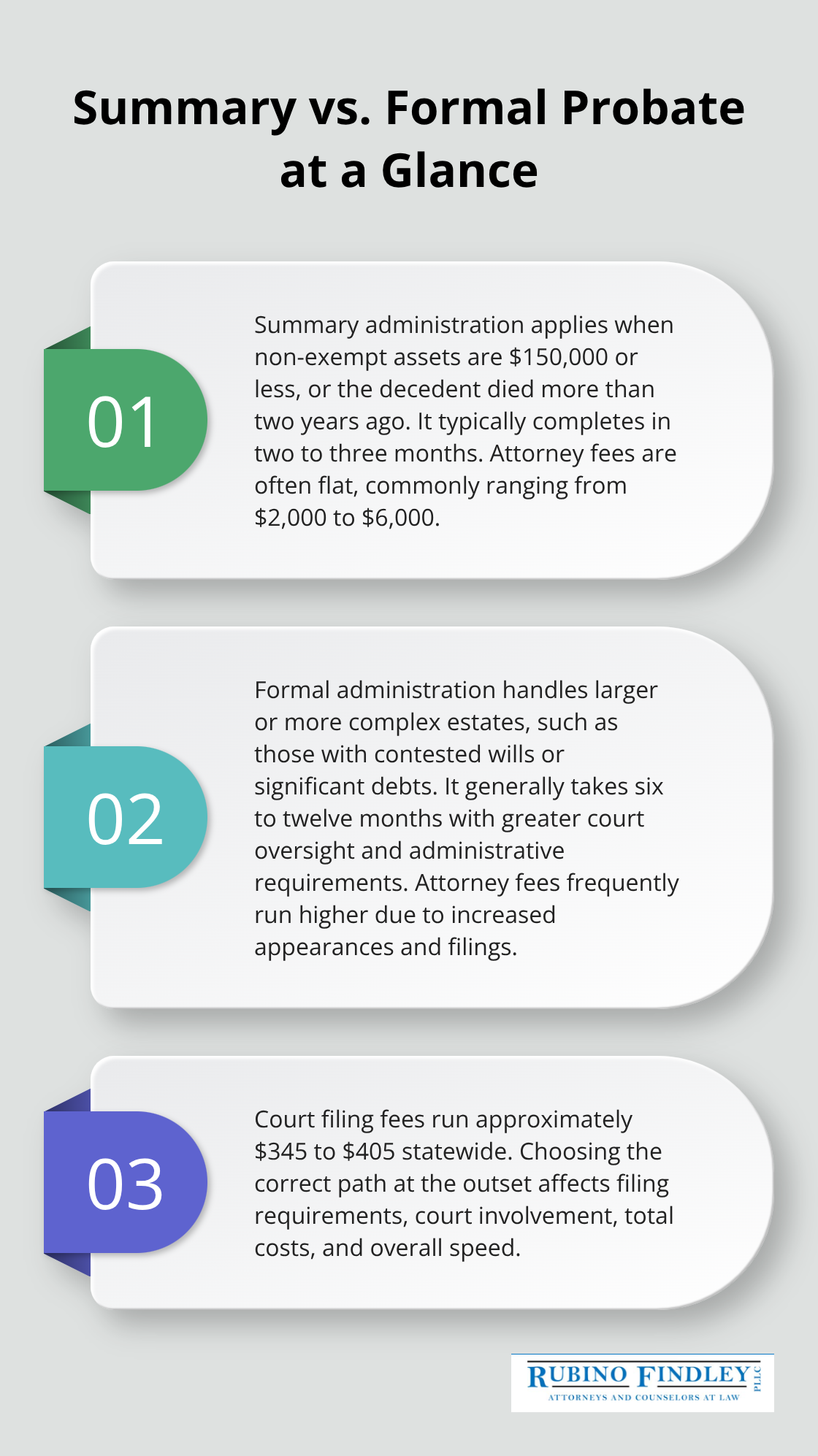
Summary administration often uses flat fees between $2,000 and $6,000, while formal administration frequently costs more due to increased court appearances and administrative work. Many families mistakenly assume summary administration is always faster or cheaper without checking their actual asset values, only to discover later they chose the wrong path.
How the Palm Beach County Probate Court Operates
The Palm Beach County probate court operates across three courthouse locations: Main West Palm Beach, South County Delray Beach, and North County Palm Beach Gardens. The court appoints a personal representative to manage the estate, verifies the will’s validity if one exists, and oversees asset distribution according to Florida law. For formal administrations, the court issues Letters of Administration that grant the personal representative authority to act on the estate’s behalf. The court also handles creditor claims by requiring publication of a Notice to Creditors in a newspaper of general circulation, giving creditors ninety days to file claims against the estate (though known creditors receive only thirty days). Property transfers, homestead determinations, and sale approvals all require court orders that must be recorded in official land records to protect title. The Fifteenth Judicial Circuit Probate Division currently requires that proposed orders be submitted electronically through their Online Services system rather than in person or by mail, a change that streamlines processing but requires familiarity with their filing portal.
The Three Critical Clocks That Start Immediately
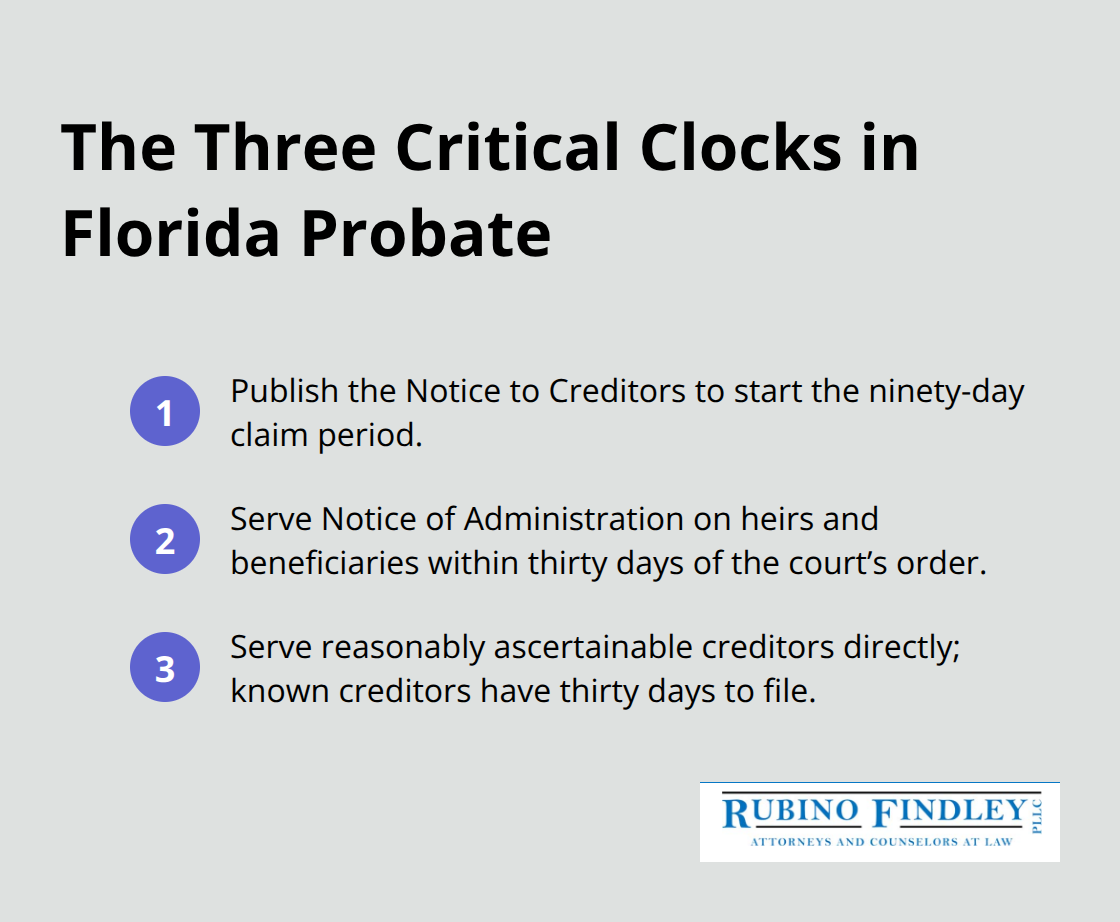
From the moment you file for probate, three critical clocks start running simultaneously. First, you must publish the Notice to Creditors, triggering the ninety-day creditor claim period. Second, you serve Notice of Administration on all beneficiaries and heirs within thirty days of the court’s order. Third, you must serve notice to reasonably ascertainable creditors directly.
Missing any of these deadlines creates liability for the personal representative and can extend the entire process. The personal representative typically receives appointment within four to six weeks in formal administrations. Once appointed, they must collect the decedent’s assets, obtain appraisals for real property, file an inventory with the court, and prepare accountings showing all receipts and disbursements. In summary administration, you skip many of these steps entirely, which explains the faster timeline. For Palm Beach County estates with real property, the personal representative must record court orders admitting the will and approving sales in official land records, a step title insurance companies often require before processing transfers.
What Comes Next in the Administration Process
The personal representative’s responsibilities expand significantly once the court appoints them. They secure all estate assets, including safe deposit boxes and financial accounts, and coordinate with banks and financial institutions to freeze or transfer accounts as needed. Real property appraisals must be completed and filed with the court within a specific timeframe. The personal representative also manages creditor claims, reviewing each submission for validity and timeliness before the court approves payment. Tax returns must be filed for both the decedent and the estate itself, and any outstanding debts or liabilities are paid from estate funds before distribution to heirs. This phase typically consumes the bulk of the probate timeline, particularly in formal administrations where court oversight and creditor resolution extend the process.
Getting Your Probate Case Started in Palm Beach County
Filing the Petition and Meeting Initial Requirements
Filing for probate in Palm Beach County requires you to submit a petition to the circuit court in the county where the decedent lived. For formal administration, Florida law requires attorney representation, so you cannot file this petition yourself. The petition must include the original will if one exists, the death certificate, and basic information about the decedent, heirs, and estate assets. Once you file, the court assigns a judge and division, and you can identify your assigned judge through the Fifteenth Judicial Circuit website to understand their specific hearing submission instructions. The filing fee runs $345 to $405 depending on your county location. Within four to six weeks after filing, the court appoints a personal representative and issues Letters of Administration-a document that grants legal authority to manage the estate. This appointment letter is essential because banks, title companies, and other institutions will not release assets without it. Many families attempt to access accounts or transfer property immediately after death, then face months of delay when institutions demand the Letters of Administration. In summary administration, the process moves faster because you skip the personal representative appointment entirely and work directly with the court clerk, but this option only works for smaller estates under $150,000 in non-exempt assets or when death occurred more than two years prior.
The Three Notice Requirements That Control Your Timeline
Once appointed, the personal representative faces three simultaneous obligations that the court enforces strictly. First, you must publish a Notice to Creditors in a newspaper of general circulation within the probate county, which triggers the ninety-day creditor claim period and protects the estate from later claims. Second, you must serve Notice of Administration on all known heirs and beneficiaries, typically within thirty days of the court order, using reliable delivery methods like FedEx or UPS with proof of delivery. Third, you must serve notice directly to reasonably ascertainable creditors, giving known creditors only thirty days to file claims while unknown creditors receive the full ninety days from publication. This dual timeline creates confusion, so maintaining a detailed service log documents exactly when and how each notice reaches its recipients. After you satisfy notice requirements, the personal representative must inventory all estate assets, arrange professional appraisals for real property and valuable personal property, and file these documents with the court within a specific timeframe. Real estate appraisals typically cost $500 to $2,000 depending on property value and complexity, and appraisers must follow Florida standards for professional valuations. The personal representative also secures safe deposit boxes, freezes financial accounts, and files tax returns for both the decedent and the estate itself before any distributions occur.
What Happens When Probate Gets Complicated
Will Contests and Validity Disputes
Will contests rank among the most destructive probate complications because they halt distributions, consume resources, and expose family rifts that may never heal. A will challenge typically alleges lack of testamentary capacity, undue influence, fraud, or improper execution under Florida Statutes 732.502 and 732.503, which require strict compliance with witness and signature requirements. The person challenging the will bears the initial burden of proof, but once they raise credible questions about validity, the personal representative must defend the will through litigation, adding months or years to the probate timeline. Real-world estimates show will contests consume $10,000 to $50,000 in legal fees depending on complexity, and some cases exceed $100,000 when multiple parties litigate competing claims. The personal representative cannot distribute assets while a will contest remains pending, creating frustration among beneficiaries who expected faster resolution.
Courts in Palm Beach County frequently encounter challenges based on undue influence, particularly when a decedent executed a new will shortly before death or when one beneficiary received disproportionate benefits compared to prior estate plans. You strengthen your position by documenting the testator’s mental state at execution, preserving witness statements, and maintaining the original will in secure storage. If your loved one left a handwritten will without witnesses, Florida law permits admission under certain circumstances, but challenges become far more likely because handwritten wills lack the formality that witnessed or notarized wills provide.
Managing Creditor Claims and Debt Settlement
Creditor claims and debt settlement consume significant time during formal administration because the ninety-day notice period gives creditors ample opportunity to file claims against the estate. Known creditors receive direct notice and only thirty days to respond, while unknown creditors have the full ninety days from publication, creating two separate deadlines that the personal representative must track carefully. The personal representative must review each claim for validity, verify the amount owed, and determine whether the debt qualifies as a priority claim under Florida law.
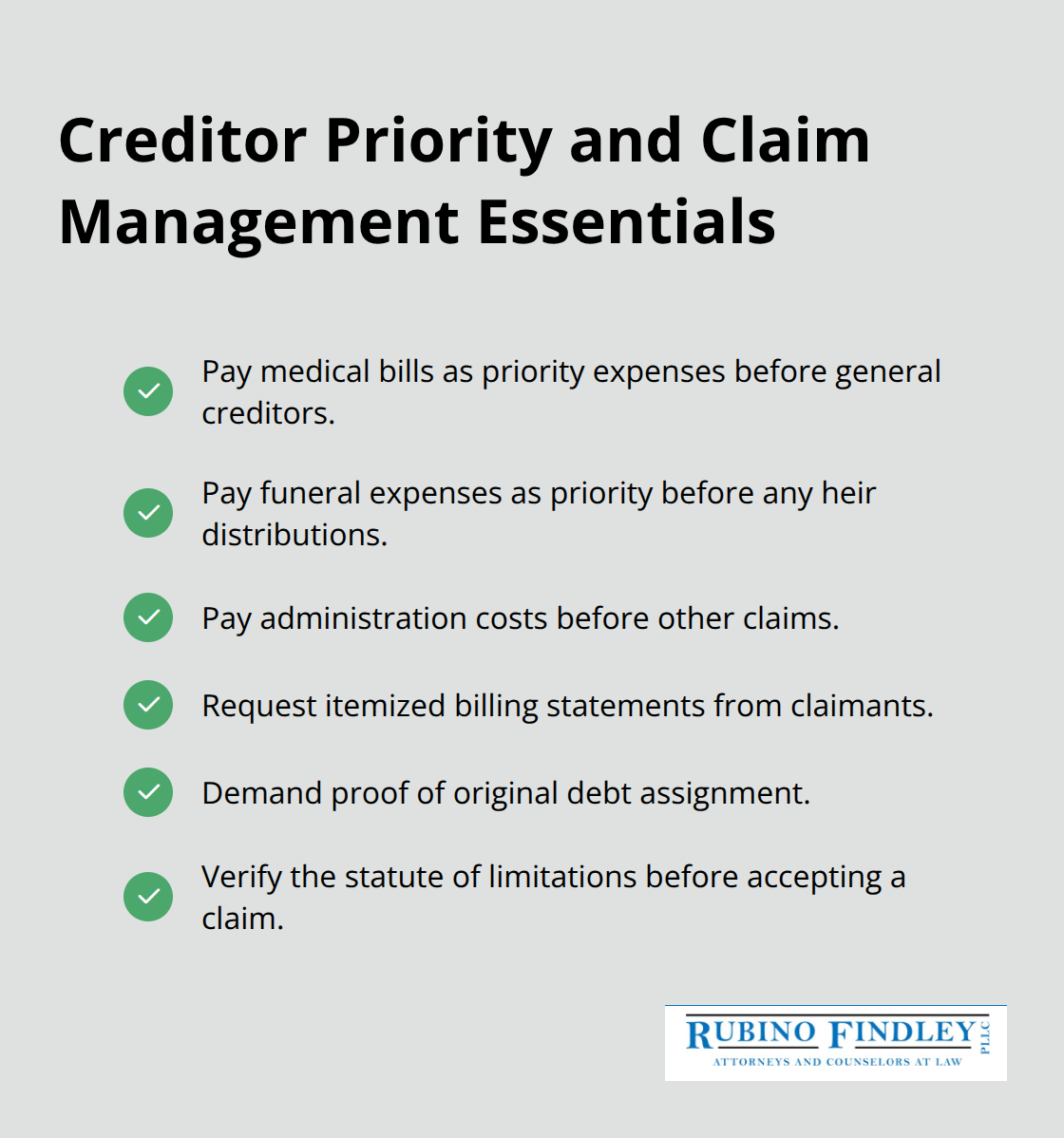
Medical bills, funeral expenses, and administration costs receive priority status and must be paid before general creditors, meaning the estate cannot distribute funds to heirs until priority debts are satisfied. Creditors frequently file inflated claims hoping the personal representative will settle rather than litigate, and weak documentation from medical providers or credit card companies gives the personal representative grounds to object and negotiate lower amounts. Try requesting itemized billing statements, proof of the original debt assignment, and verification that the statute of limitations has not expired before accepting any claim.
Some creditors attempt to bypass the formal claims process entirely by filing separate lawsuits against the estate, forcing the personal representative to defend litigation on multiple fronts simultaneously. The court has authority to consolidate related creditor claims and prevent duplicative litigation, but the personal representative must request consolidation proactively. Real estate mortgages present different challenges because the lender holds a security interest that typically survives probate, meaning the estate must pay the mortgage or the lender can foreclose. If the estate lacks sufficient liquid assets to pay all claims, the personal representative must petition the court for an order determining priority and directing partial payment, a process that extends timelines by months.
Resolving Family Conflicts During Administration
Family conflicts during probate often stem from unclear communication, perceived favoritism in asset distribution, or disagreements over whether the personal representative acts appropriately. These tensions escalate when multiple beneficiaries live in different states, communicate infrequently, or hold fundamentally different views about the decedent’s wishes. The personal representative should provide written accountings at least every six months, itemizing all receipts, disbursements, and current asset values, because transparency prevents later disputes about whether funds were mishandled.
Florida law permits beneficiaries to object to accountings within thirty days of service, triggering a formal objection process that can result in court intervention if the parties cannot reach agreement. When family members threaten litigation or openly dispute the personal representative’s decisions, the personal representative should consider obtaining separate legal counsel to protect personal liability, particularly if the personal representative is also a beneficiary. Conflicts of interest arise frequently when the decedent named one child as personal representative while other children inherit equal shares, because the personal representative’s decisions regarding asset sales, creditor payments, and timing of distributions directly affect what each beneficiary receives.
The personal representative cannot favor themselves or their own branch of the family without exposing themselves to surcharge actions where beneficiaries demand repayment of amounts they claim were improperly distributed. Some families benefit from mediation before litigation erupts, allowing neutral third parties to facilitate discussions about asset distribution and personal representative compensation without the formal court process. Litigation over probate administration decisions typically costs $20,000 to $75,000 and extends the probate timeline by one to three years, making it substantially more expensive than the original administration would have cost. When family dynamics are fractious, the personal representative should document every significant decision in writing, communicate decisions promptly to all beneficiaries, and avoid making unilateral choices about discretionary matters without consulting interested parties first.
Final Thoughts
Florida probate court procedures demand attention to detail, strict adherence to deadlines, and clear communication with all parties involved. The process moves faster when you select the correct administration path from the start, file complete documentation, and satisfy notice requirements promptly. Summary administration wraps up in two to three months for smaller estates, while formal administration typically takes six to twelve months depending on complexity and whether disputes arise.
Will contests, creditor claims, and family conflicts extend timelines significantly, sometimes adding years and tens of thousands in legal fees. The personal representative’s role carries real liability, meaning mistakes in asset management, notice service, or accounting result in surcharge actions where beneficiaries demand repayment. Working with an attorney in Boca Raton who understands Palm Beach County probate protects your family from costly errors and accelerates the administration process.
We at Rubino Findley, PLLC have guided countless families through probate administration, will contests, and complex asset distribution. Contact us today to schedule your free consultation and learn how we can help your family navigate estate planning or probate administration in Palm Beach County.